Accessible Seating Design Guide for Inclusive Public Spaces Projects
Accessible seating is no longer a secondary consideration in public space design. For councils, it is a fundamental part of delivering inclusive, functional, and compliant community environments. As expectations around accessibility continue to grow, public spaces must be designed to accommodate a wide range of users, including people with mobility challenges, elderly visitors, and families with prams. Integrating well-designed bench seating into parks and shared spaces is one of the most effective ways to improve accessibility while maintaining durability and usability across high-traffic environments.
When planned correctly, accessible seating supports not only compliance requirements but also increased park usage, improved user experience, and stronger community engagement.
Key Takeaways
- Accessible seating helps councils create inclusive public spaces that support comfort, safety and community use.
- Good design includes correct seat height, armrests, back support and space for wheelchair access.
- Proper placement along pathways and near key areas ensures seating is easy to reach and use.
- Durable materials like aluminium provide long term performance with low maintenance in outdoor environments.
What Is Accessible Seating?
Accessible seating refers to seating designed to be usable by as many people as possible, regardless of physical ability. It forms a key part of inclusive and universal design, ensuring that public spaces are welcoming and functional for everyone.
Unlike standard seating, accessible seating considers factors such as ease of access, appropriate dimensions, and integration with surrounding infrastructure. This includes providing adequate space for wheelchair users, ensuring comfortable seat heights, and positioning seating in accessible locations.
Universal design principles guide this approach. Rather than designing specifically for one group, accessible seating is created to support a broad range of users. This ensures that public spaces are not only compliant but also practical and inclusive.
Why Accessible Seating Matters in Public Spaces
Accessible seating plays a direct role in how people interact with public spaces. Without it, many users may find parks difficult or uncomfortable to use.
For councils, the benefits of accessible seating extend beyond compliance. Well-designed seating can:
- Improve overall park usability for a wider audience
- Encourage longer visits and increased dwell time
- Support social interaction and community engagement
Accessible seating is particularly important for users who rely on consistent rest points or require additional support when sitting and standing. This includes elderly individuals, people with injuries, and those using mobility aids.
By prioritising accessibility, councils can create spaces that feel welcoming and inclusive, ultimately increasing the number of people who use and enjoy public parks.
Accessibility Standards and Compliance (Australian Context)
In Australia, accessible seating must align with established standards and regulations. The Disability Discrimination Act (DDA) requires that public spaces provide equitable access for all users, while AS 1428 outlines specific design requirements for accessibility.
These standards cover important considerations such as pathway access, circulation space, and usability. Councils are responsible for ensuring that infrastructure, including seating, meets these requirements.
While compliance is essential, it should be viewed as a baseline rather than a final goal. Designing beyond minimum standards allows councils to create spaces that are not only compliant but genuinely usable and comfortable for all members of the community.
Key Design Features of Accessible Seating
Design plays a critical role in determining whether seating is truly accessible. Small details can significantly impact usability and comfort.
Accessible seating should incorporate features that support a wide range of users. These include appropriate seat height, supportive backrests, and armrests that assist with sitting and standing. Adequate space around the seating is also essential, particularly for wheelchair users who require clear access and positioning.
Surface stability is another important factor. Seating must be placed on firm, even ground to ensure safe and easy access. Materials should be durable and resistant to weather conditions, ensuring long-term performance in outdoor environments.
When these elements are combined, accessible seating becomes both practical and comfortable, supporting consistent use across diverse user groups.
Placement and Layout: Making Seating Truly Accessible
Even well-designed seating can fail if it is not positioned correctly. Placement and layout are just as important as the seating itself.
Accessible seating must be connected to clear, navigable pathways. Without this, users may not be able to reach the seating comfortably or safely. Seating should also be located near key amenities such as playgrounds, walking tracks, and rest areas.
Spacing between seating is another important consideration. Providing enough room for movement and circulation ensures that all users can access and use the space without difficulty.
Poor placement can make otherwise compliant seating unusable. Councils must take a holistic approach, ensuring that seating integrates seamlessly into the overall park layout.
Types of Accessible Seating at SeatsPlus
We offer a diverse range of high-quality, accessible seating options to suit different needs and environments. As a locally based manufacturer, we also offer customisation to ensure your seating is just right for your unique requirements, without compromising on aesthetics.
Here are some of our most popular accessible seating designs:
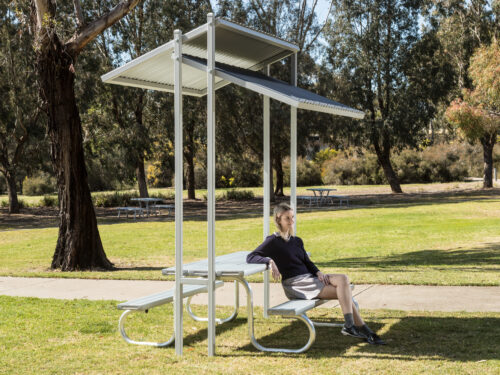
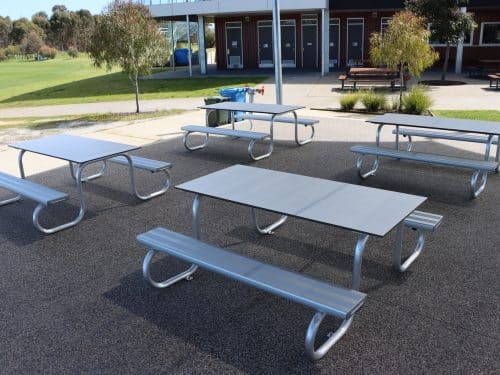
- Outdoor Learning Setting – Smooth Top: Ideal for educational settings and community spaces, this setting features a smooth top surface that enhances safety and makes cleaning a breeze. Thoughtfully designed to accommodate wheelchairs at each end, it ensures inclusive participation in group activities and learning environments.
- Elite Park Setting: A premium option combining contemporary design with robust aluminium construction. Purpose-built to seat up to four wheelchair users, this setting is a standout choice for public and community areas, such as schools, parks, and local council spaces.
- Deluxe Park Setting: Designed for durability and comfort, the Deluxe Park Setting is perfect for busy outdoor spaces including parks, playgrounds, and recreational areas. It accommodates two wheelchair users, promoting social interaction in a friendly, accessible environment.
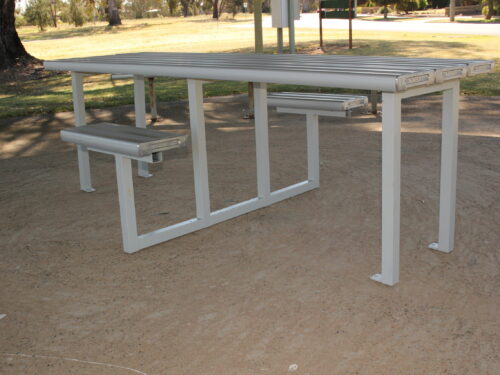
- Wheelchair-Friendly Park Setting: Featuring increased clearance and ample space, this setting offers a practical and inclusive seating solution for wheelchair users. Designed to allow wheelchair access at both ends, it’s a great addition to any inclusive outdoor area.
- Wheelchair-Friendly Park Setting with Back Rest: Combining all the accessible features of our standard wheelchair friendly park setting with the added comfort of a supportive backrest. Designed to accommodate wheelchair users at both ends, it provides a more relaxed and secure seating experience.
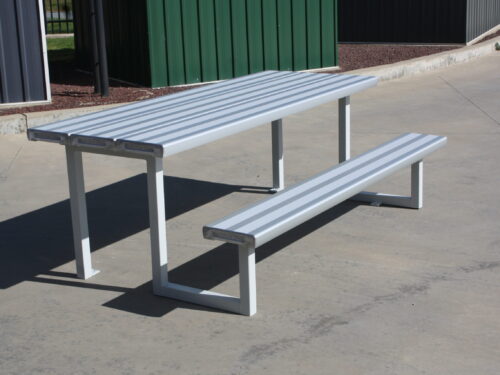
- Bench Seating Options: Versatile and stylish, our bench seating is ideal for both indoor and outdoor environments. These flexible seating solutions can be easily adapted to suit your space and accessibility requirements.
If you’re not sure which option is best, our team can guide you through the features and benefits of each to help you find the perfect fit.
Designing for a Range of Users, Not Just Compliance
Accessible seating should be designed with real-world use in mind, not just regulatory requirements. While compliance ensures minimum standards are met, good design goes further by considering how people actually use public spaces.
Different users have different needs. Some require additional support when sitting, while others need space for mobility aids. Families may need flexible seating arrangements, while elderly users often prioritise comfort and accessibility.
Designing for a range of users ensures that seating is versatile and adaptable. This approach improves the overall functionality of public spaces and creates environments that feel inclusive rather than restrictive.
When councils focus on usability rather than just compliance, they deliver better outcomes for the entire community.
Common Mistakes in Accessible Seating Design
Accessible seating is often included in park design, but it is not always implemented effectively. Avoiding common mistakes can significantly improve usability and accessibility.
Some of the most frequent issues include:
- insufficient space for wheelchair access and positioning
- seating that is not connected to accessible pathways
- placing accessible seating in isolated or low-visibility areas
- inadequate spacing between seating units
- treating accessibility as a late-stage addition rather than part of the design process
These mistakes can limit the effectiveness of otherwise well-designed infrastructure. Addressing them early in the planning stage ensures better long-term results.
Material and Durability Considerations for Accessible Seating
Public seating must withstand constant use and exposure to outdoor conditions. For councils, durability and maintenance are key considerations when selecting accessible seating.
Materials such as aluminium offer strong resistance to weather, corrosion, and wear. This makes them well-suited for outdoor environments where longevity and low maintenance are essential.
Accessible seating must also maintain its structural integrity over time. Worn or damaged seating can create safety risks and reduce usability. Choosing durable materials helps minimise ongoing maintenance costs and ensures consistent performance.
Balancing accessibility with durability allows councils to deliver infrastructure that is both inclusive and practical.
Integrating Accessible Seating into Park Master Planning
Accessible seating should be incorporated into park design from the earliest planning stages. Retrofitting accessibility features can be costly and may not achieve the same level of integration as a well-planned layout.
Councils should assess how parks are used and identify where accessible seating will have the greatest impact. This includes considering user flow, activity zones, and future community needs.
Integrating accessible seating into master planning ensures that it works in harmony with other elements such as pathways, amenities, and recreational areas. It also allows for scalable solutions that can adapt as community needs evolve.
A proactive approach to planning reduces long-term costs and results in more effective public spaces.
Accessible Seating as a Standard for Better Public Spaces
Accessible seating is not just about meeting requirements. It is about creating public spaces that are usable, inclusive, and welcoming for everyone.
By focusing on thoughtful design, strategic placement, and durable materials, councils can significantly improve how parks are experienced. Accessible seating supports increased usage, longer visits, and stronger community engagement.
Investing in well-designed bench seating ensures that public spaces remain functional and accessible over the long term. As expectations around inclusivity continue to grow, accessible seating will remain a key component of successful public infrastructure.