Choosing the Right Seating for Kindergartens – A Guide to Safety, Comfort, & Durability
Kindergarten seating needs to do more than give children somewhere to sit. It should suit their size, support everyday activities, fit safely within the outdoor environment and handle regular use. Choosing purpose-designed furniture from a kiddie seating range can help early learning providers create spaces that work for meals, group learning, quiet time and outdoor play.
The right choice depends on how children will use the space, how many need seating and whether furniture needs to remain fixed or move as activities change.
Key Takeaways
- Kindergarten seating should be child-sized, stable and suited to daily activities like meals, learning and outdoor play.
- Choosing the right seating starts with understanding how children will use each outdoor area.
- Safety, shade, accessibility and supervision should guide where furniture is placed.
- Durable low maintenance materials like aluminium help kindergarten furniture handle regular use and outdoor conditions.
Start With How Children Will Use the Space
Before comparing materials or colours, consider what will actually happen around the furniture. Kindergarten outdoor environments often support several activities throughout the day, so different areas may require different seating.
Seating for Eating and Group Activities
Park-style settings work well where children need a shared table for morning tea, lunch, art or collaborative activities. Keeping the table and seat height appropriate for younger users can make it easier for children to participate independently.
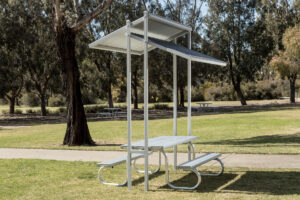
A product such as the Kiddie Park Setting combines child-sized seats and a table within one setting. SeatsPlus specifies a 300 mm seat height and 520 mm table height, with an aluminium frame suited to outdoor kindergarten and primary school environments.
Seating for Quiet Time and Social Interaction
Not every seating area needs a table. Benches positioned away from busy play equipment can create spaces for reading, conversation, waiting or simply taking a short break.
Think about where children naturally gather and whether the location offers enough separation from active play to make the seating useful.
Seating for Outdoor Learning
Outdoor furniture can also extend learning beyond the indoor classroom. Well-positioned outdoor classroom seating can support storytelling, educator-led discussions, nature activities and small-group learning without making the outdoor environment feel overly formal.
Choose Age-Appropriate, Child-Sized Seating
Furniture designed for adults or older students may not provide the right proportions for kindergarten children. Age-appropriate furniture supports easier access and allows children to use tables and benches with greater independence.
ACECQA notes that age-appropriate furniture and equipment can help minimise accidents while supporting children’s learning, growing independence and confidence.
Why Seat and Table Height Matter
A seat that is too high can make getting on and off awkward. A table that is too tall may make activities uncomfortable or require children to reach unnecessarily.
Look for furniture designed around younger users rather than assuming any small outdoor bench will be suitable.
Consider the Age Range Using the Furniture
Kindergartens may cater for three and four-year-old groups as well as children at different stages of physical development. Mixed-age centres should therefore consider the full range of children expected to use each area.
The goal is not to find one universal dimension for every child. It is to choose furniture intentionally designed for early learning environments.
Make Safety and Stability a Priority
Safety involves more than checking whether a bench has a smooth surface. Furniture should be stable, suitable for its intended location and maintained in good condition throughout its use.
This aligns with the National Quality Standard, which states that premises, furniture and equipment should be safe, clean and well maintained.
Look at Stability, Not Just Appearance
Check how the furniture behaves when children sit, stand and move around it. A setting may appear undamaged while still being unsuitable if it shifts unexpectedly or sits unevenly on the surface.
For broader planning considerations, safe school seating should balance stability with durability, appropriate sizing and practical placement.
Keep Surrounding Areas Clear
Furniture should not obstruct important movement routes or create congestion beside playground equipment, doorways and active play zones.
Allow enough surrounding space for children and educators to move comfortably without having to squeeze between furniture.
Decide Between Flexible and Fixed Seating
One of the most useful decisions to make early is whether the furniture needs to move.
When Freestanding or Stackable Seating Works Best
Movable furniture can suit spaces that change throughout the day. A kindergarten may use an area for group learning in the morning and return it to open play later.
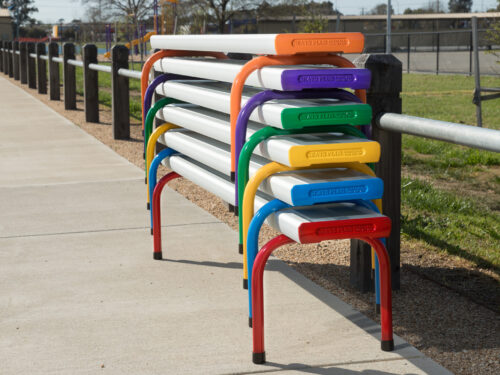
Stackable or freestanding options make it easier to reconfigure the environment without permanently assigning one activity to a particular space.
When Fixed Seating May Be More Practical
Permanent seating can work well along playground edges, near waiting areas or in frequently used locations where furniture does not need to move.
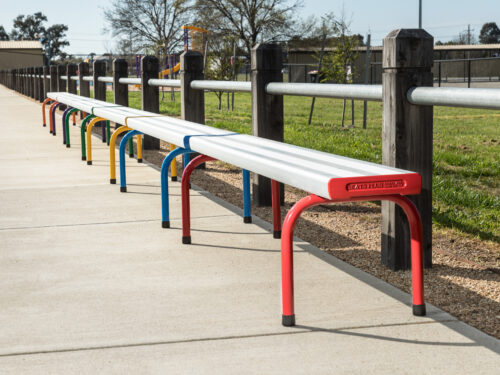
The Kiddie Bolt Down Bench is designed for fixing to concrete and has a 300 mm seat height. Fixed options can provide a consistent seating location while reducing unwanted movement.
Plan Seating Around Playground Layout and Supervision
Good furniture can still perform poorly when placed in the wrong location. Seating should form part of the overall outdoor layout rather than being added wherever unused space happens to remain.
Maintain Clear Sightlines
Educators need to supervise outdoor areas effectively. Large settings should therefore be positioned so they do not unnecessarily block views of playgrounds, paths or other activity zones.
Separate Quiet Seating From Active Play
A bench intended for conversation or quiet time will be more useful when it is not positioned directly beside running routes, climbing equipment or other high-energy activities.
Creating different activity zones gives children more choice in how they use the outdoor environment.
Protect Movement Through the Space
Consider traffic flow around tables and benches. Furniture should leave adequate room for movement and should not create unnecessary pinch points between buildings, fences or playground equipment.
Consider Shade and Weather Exposure
Outdoor furniture needs to work with the environment around it. Seating that is rarely comfortable to use because it receives intense afternoon sun may not achieve its intended purpose.
Position Seating Where Children Can Use It Comfortably
Existing shade structures, trees, verandahs and shelters can influence where furniture works best. Seasonal changes in sun position should also be considered when planning permanent locations.
The National Quality Framework includes requirements relating to outdoor shade and spaces that support children’s safe access and participation.
Think About Environmental Exposure When Choosing Materials
Kindergarten outdoor furniture may be exposed to rain, UV, dirt and changing temperatures throughout the year. Materials should therefore be chosen for ongoing outdoor use rather than occasional exposure.
Support Inclusive and Accessible Participation
An outdoor environment should enable children with different abilities to participate in activities alongside their peers.
ACECQA’s Quality Area 3 specifically focuses on physical environments that support every child’s access, participation and play-based learning.
Allow Space Around Seating
Tables and benches should not be packed so tightly that they restrict accessible movement. Consider the approach to the furniture as well as space between settings and surrounding equipment.
Think Beyond the Seat Itself
Accessibility is influenced by the whole environment. Pathways, ground surfaces, furniture spacing and activity layouts can all affect whether children can participate comfortably.
Choose Materials That Can Handle Daily Kindergarten Use
Kindergarten furniture is institutional furniture. It needs to cope with repeated daily use, outdoor weather and the realities of children eating, playing and learning around it.
Why Aluminium Suits Outdoor Kindergarten Furniture
Aluminium is particularly practical for outdoor seating because it is durable, relatively lightweight and does not splinter like timber. SeatsPlus uses aluminium throughout much of its Kiddie Range, with powder-coated options available for adding colour to early learning spaces.
It is also straightforward to clean, which is useful in areas exposed to food spills, dirt and everyday outdoor contamination.
Look at Long-Term Value, Not Just Initial Cost
Purchase price should be considered alongside durability, maintenance and expected service life.
Furniture that performs reliably through years of regular use can provide better whole-of-life value than an inexpensive alternative requiring repeated repairs or early replacement.
Make Cleaning and Maintenance Part of the Selection Process
Kindergarten furniture will inevitably encounter food, mud, leaves and general outdoor grime. Ease of cleaning should therefore be considered before furniture is installed.
Smooth, accessible surfaces make routine care easier. Cleaning also provides an opportunity for staff to notice loose components, surface damage or changes in stability before they develop into larger issues.
Regular inspection is particularly important for fixed furniture because anchors and surrounding surfaces form part of the overall installation.
Match Seating Capacity to Group Size
Consider how many children will realistically use each setting at the same time.
A small park setting may suit art activities or lunch groups, while larger group furniture can support shared meals and educator-led outdoor activities. The aim is to provide enough seating without filling the entire outdoor space with furniture.
Seating quantity should therefore reflect the program as well as available space. Preserving open areas for movement, exploration and play remains important.
Choose the Right Seating Type for Each Kindergarten Area
Rather than using one furniture design throughout the whole centre, match seating to the purpose of each area.
Park settings are practical where children need a shared table. Stackable benches support flexible spaces that are regularly rearranged. Fixed benches suit permanent resting or gathering points, while larger settings can accommodate group activities.
A combination of seating types often creates a more useful environment than relying on a single product across every outdoor zone.
Use Colour to Complement the Kindergarten Environment
Colour can help outdoor furniture feel integrated with playground equipment, landscaping and the visual identity of a kindergarten.
Powder-coated frames can be used to add brighter colours to activity areas or coordinate furniture across the centre. SeatsPlus offers its Kiddie Range in a selection of bright and Colorbond-inspired finishes.
Colour should support the wider design rather than being the only factor considered when choosing furniture.
Consider Funding When Planning Larger Outdoor Upgrades
Kindergarten seating may form part of a wider playground, accessibility or facility improvement project.
In Victoria, the Building Blocks program includes funding streams for kindergarten capacity, improvement, inclusion and planning. Availability varies by stream, so services should check current eligibility and application status rather than assuming funding is continuously open.
This is especially relevant when furniture forms part of broader work involving inclusive environments, outdoor learning spaces, playground upgrades or additional kindergarten places.
A Practical Checklist Before Ordering Kindergarten Seating
Before placing an order, consider:
- What age group will use the furniture?
- What activities will take place around it?
- How many children need seating at one time?
- Should the furniture remain fixed or move regularly?
- Is the proposed location suitable for safe supervision?
- Is there appropriate shade for the intended use?
- Is sufficient circulation space available around the furniture?
- Does the layout support accessibility and participation?
- Can the material handle ongoing outdoor exposure?
- Will the furniture be straightforward to clean and maintain?
Answering these questions first makes it easier to select furniture based on actual kindergarten needs rather than appearance alone.
Conclusion
The best kindergarten seating balances child-sized design, safety, usability, flexibility and long-term durability. Different outdoor areas may call for different solutions, from table settings for meals and activities to fixed benches for permanent gathering points and stackable options for flexible learning.
SeatsPlus’ kiddie seating range includes park settings, stackable benches, bolt-down and inground benches, larger group settings and freestanding tables designed specifically for younger users.
By considering how children will use each part of the outdoor environment before selecting furniture, kindergarten operators, councils and project teams can create spaces that support learning, social interaction and play while remaining practical to manage for years to come.